
 Facebook
 X
X
 Pinterest
 Copy Link

What Buyers Notice First at a Home Showing
The first 10 minutes of a home showing matter. In fact, buyers often decide how a home feels before they have toured every bedroom, checked the basement, or asked about the roof and mechanical systems.
In Central Pennsylvania, buyers may be touring homes in Hershey, Hummelstown, Palmyra, Lebanon, Harrisburg, Mechanicsburg, Elizabethtown, and nearby communities. However, regardless of location, most buyers notice the same things first: curb appeal, cleanliness, light, space, smells, and signs of maintenance.
Fortunately, many of the details that create a strong first impression are simple to improve. As a result, sellers can often make a home show better without taking on a major renovation project.
1. Curb Appeal and the Front Door
First, what buyers notice first at a home showing often begins outside. The driveway, landscaping, porch, front steps, exterior lighting, and front door all influence the first impression before a buyer enters the home.
Before entering, buyers may notice:
- The driveway, sidewalks, porch, and front steps
- Landscaping, grass, mulch, shrubs, and weeds
- Exterior paint, siding, shutters, gutters, and rooflines
- Trash cans, toys, tools, hoses, and other outdoor clutter
- House numbers, porch lights, and the condition of the front door
- Garages, sheds, fences, barns, or outdoor living spaces
For that reason, a simple exterior cleanup can go a long way. For example, sweep the porch, remove clutter, trim landscaping, replace a worn doormat, and make sure exterior lights work.
Quick tip
Before listing your home, stand across the street or at the end of the driveway and look at it like a buyer would. Then ask yourself: Does this home look cared for before I even walk in?


2. Smell, Temperature, and Comfort
Next, buyers notice how the home feels the moment they enter. Although they may not say it out loud, they will notice if the home feels too hot, too cold, stuffy, damp, or strongly scented.
Common distractions include:
- Pet odors
- Smoke odors
- Musty basement smells
- Strong cooking smells
- Heavy candles, plug-ins, or air fresheners
- Overflowing trash or litter boxes
Instead of trying to cover up odors, focus on fresh air and a deep cleaning. Additionally, open blinds, let in natural light, and keep the home at a comfortable temperature.
In Central Pennsylvania, this is especially important during hot summers and cold winters. For example, a warm home in January or a cool home in July can make a showing much more comfortable. As a result, buyers can focus on the home itself rather than the temperature.
3. Cleanliness and Small Repairs
After that, buyers quickly look for signs of upkeep. They do not expect every home to be brand new. However, they do expect it to look maintained.
Within the first few minutes, buyers may notice:
- Dust on vents, ceiling fans, and baseboards
- Dirty windows or stained carpets
- Scuffed walls, chipped paint, or damaged trim
- Burnt-out light bulbs
- Sticking doors or loose handles
- Dripping faucets or running toilets
- Water stains, damaged caulk, or signs of moisture
Even small issues can create bigger questions. For instance, a buyer may see a loose cabinet handle and wonder whether other maintenance has also been delayed.
Therefore, before showings begin, take care of the easy repairs. Replace light bulbs, tighten handles, touch up paint, fix dripping faucets, and clean visible surfaces. In turn, buyers are more likely to focus on the home’s best features.

4. Light and Room Size
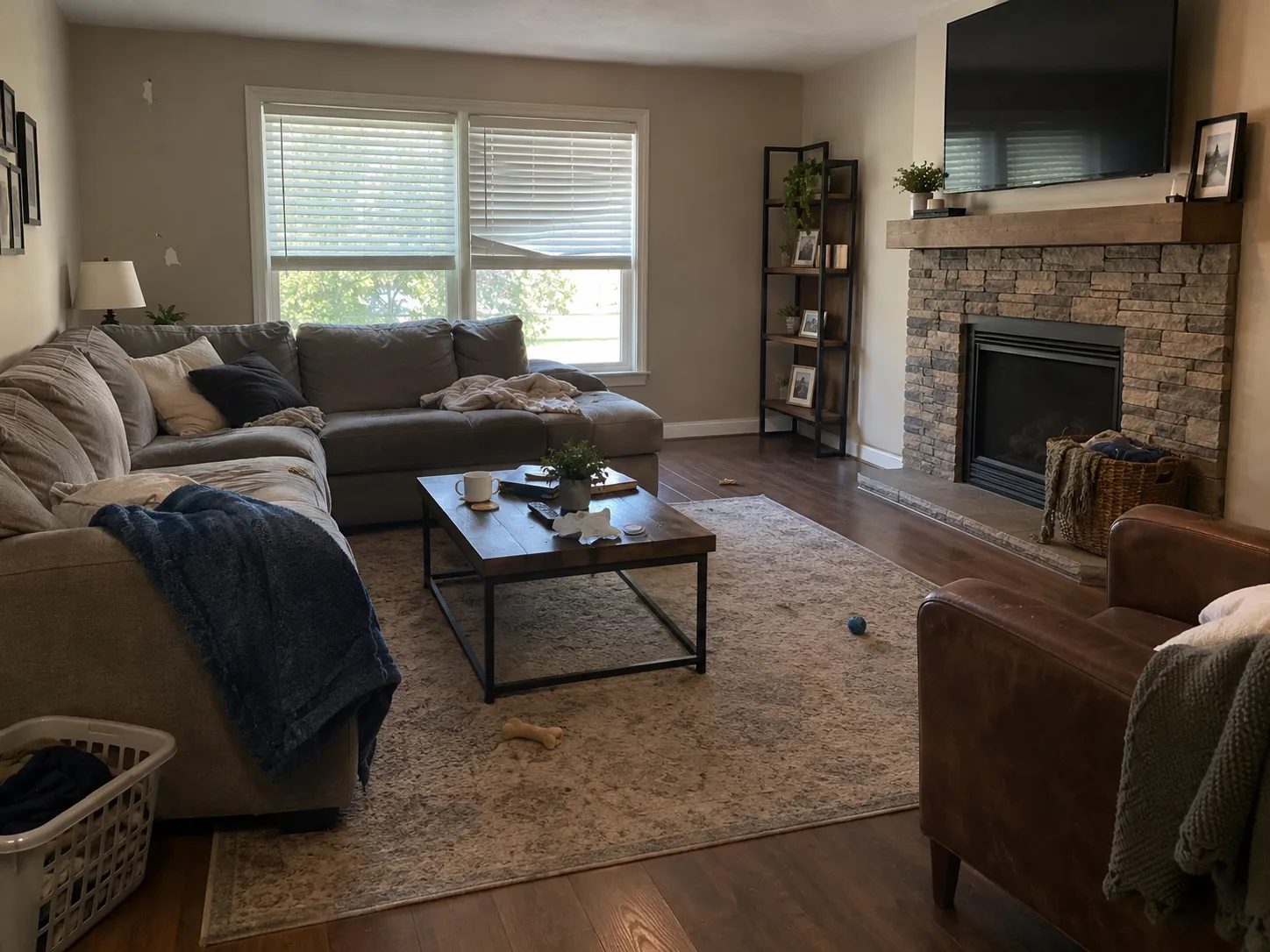
Similarly, bright homes usually feel larger, cleaner, and more welcoming. On the other hand, dark rooms can make buyers feel unsure about a space, even when the room is a good size.
Before each showing:
- Open blinds and curtains when privacy allows
- Turn on lights in every room
- Add lamps to darker corners
- Replace burnt-out bulbs
- Use matching light bulbs when possible
- Turn on lights in hallways, basements, closets, and stairways
At the same time, buyers notice whether they can move easily through the home. Too much furniture, cluttered walkways, or crowded countertops can make rooms feel smaller.
To help, remove extra furniture if possible and create clear paths through the home. That way, buyers can walk through each room comfortably instead of squeezing around personal belongings.
5. The Kitchen and Bathrooms
Kitchens and bathrooms are a major part of what buyers notice first at a home showing because they are highly used spaces and can be expensive to update. Buyers look closely at cleanliness, storage, condition, and everyday functionality.
What buyers notice in the kitchen
- Counter space and storage
- Cabinet condition and hardware
- Appliances and how clean they look
- The sink, faucet, backsplash, and lighting
- Visible dishes, papers, cords, and countertop clutter
- How the kitchen connects to living and dining areas
As a starting point, clear the counters as much as possible. Then put dishes away, empty the sink, wipe appliances, and remove mail, magnets, and everyday paperwork.
What buyers notice in bathrooms
- Clean toilets, sinks, showers, tubs, and mirrors
- Fresh towels and clear countertops
- Grout, caulk, fixtures, and lighting
- Signs of leaks, moisture, or poor ventilation
- Storage and usable counter space
Importantly, bathrooms do not need to be fully renovated to show well. Instead, they need to look clean, organized, and cared for.
6. Storage, Basements, and Outdoor Space
In addition, Central Pennsylvania buyers often value functional storage and usable outdoor space. Therefore, basements, garages, sheds, mudrooms, attics, porches, decks, and yards can strongly influence a buyer’s decision.
Buyers notice whether these spaces feel:
- Dry and well-maintained
- Clean and organized
- Easy to access
- Large enough for storage, hobbies, tools, pets, or seasonal items
- Useful for gardening, entertaining, play, or outdoor living
For example, a basement does not need to be finished to make a good impression. Instead, it should feel clean, dry, bright, and purposeful. If it is used for storage, organize it so buyers can see the available space.
Likewise, for homes with acreage, outbuildings, barns, or large yards, keep paths clear and make outdoor areas easy to explore. After all, buyers are evaluating how they could use the land—not just the number of acres.
7. Can Buyers Picture Their Life There?
Finally, the biggest question buyers ask during a home showing is simple: Can I see myself living here?
At this point, they are imagining:
- Where they will put their furniture
- How they will use the kitchen
- Whether there is room for family, guests, pets, hobbies, or a home office
- Where they will store coats, shoes, tools, sports equipment, and seasonal items
- How they will spend time in the yard, basement, porch, deck, or living room
Ultimately, a home does not need to look like a model home. Instead, it should feel clean, comfortable, functional, and easy to imagine as someone else’s next home.
Quick Pre-Showing Checklist
Before you leave for a showing, use this simple list:
- Turn on lights throughout the home
- Open blinds and curtains
- Set the thermostat to a comfortable temperature
- Clear kitchen counters and empty the sink
- Make beds and straighten bathroom towels
- Put away shoes, laundry, mail, pet items, and personal clutter
- Take out trash
- Check for odors
- Sweep the porch and entryway
- Secure valuables, medications, documents, and personal information
- Take pets with you or arrange for them to be out of the home
Final Takeaway
Ultimately, understanding what buyers notice first at a home showing helps sellers prepare the home with purpose. The goal is not perfection; it is to remove distractions and help buyers picture themselves living there.
In summary, what buyers notice first at a home showing includes the home’s curb appeal, cleanliness, comfort, lighting, maintenance, storage, and overall flow. By focusing on the basics—cleaning, decluttering, lighting, temperature, curb appeal, and small repairs—Central PA sellers give buyers a better chance to see the home’s true value.
By focusing on the basics—cleaning, decluttering, lighting, temperature, curb appeal, and small repairs—sellers give buyers a better chance to see the home’s true value. As a result, buyers may stay engaged longer, ask better questions, and more easily picture the home as their own.



